
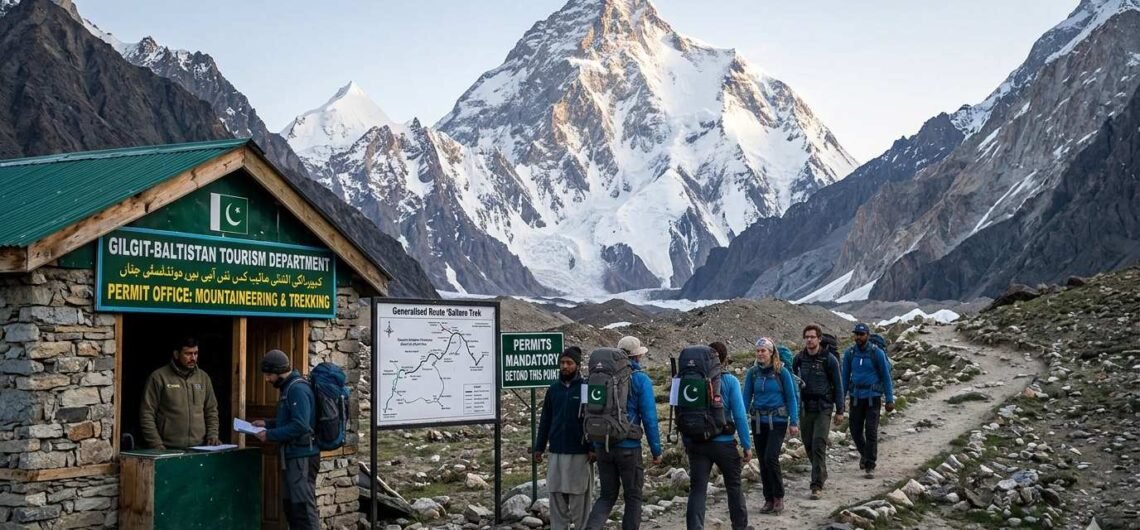
Pakistan has rapidly become one of the world’s most exciting trekking destinations. Every year, thousands of international adventurers arrive to explore the towering peaks of the Karakoram, the glacier systems of Baltoro, the legendary K2 Base Camp route, and the untouched valleys of Gilgit-Baltistan. But here’s the part many trekkers discover too late: Pakistan’s trekking permit system can feel like navigating a maze in the middle of the mountains.
This guide breaks down everything you need to know about trekking permits, restricted zones, permit costs, government regulations, and trekking rules in Pakistan in 2026. Whether you are planning the K2 Base Camp Trek, Snow Lake Trek, Gondogoro La Pass, or remote expeditions in border regions, this article gives you the complete roadmap.
Understanding Pakistan’s Trekking Permit System
Pakistan’s trekking permit structure exists primarily because many trekking routes pass through environmentally protected regions, glacier systems, military-sensitive zones, and international border corridors. Unlike in countries where trekkers can freely enter mountain regions, Pakistan manages certain trekking routes under a controlled-access framework.
Licensed trekking companies usually handle the entire process. Your operator submits your documents, itinerary, passport copies, and applications to the relevant departments. This system may feel bureaucratic, but it is designed to reduce unauthorized movement in sensitive mountain corridors.
Pakistan divides trekking areas into two major categories:
- Open trekking zones
- Restricted trekking zones
Open zones generally allow independent travel without special trekking permits. Restricted zones require government approval, registered operators, and sometimes mandatory liaison officers. Understanding this distinction is the single most important step in planning a successful trek in Pakistan.
Why Pakistan Uses Restricted Trekking Zones
If you look at Pakistan’s northern map, you’ll notice something fascinating: many iconic trekking routes sit dangerously close to international borders. The Baltoro Glacier region, for example, lies near highly sensitive geopolitical territory. The same applies to sections of the Karakoram bordering China and Indian-administered Kashmir.
Environmental preservation is another key factor. Areas such as the Central Karakoram National Park (CKNP) contain fragile glacier ecosystems that face increasing pressure from tourism. Authorities use permit fees and environmental charges to support waste management and conservation initiatives. According to recent 2026 trekking updates, environmental management fees in the Baltoro region have significantly increased due to growing trekking traffic.
Which Areas in Pakistan Require Trekking Permits
Not every trek in Pakistan requires special authorization. However, several world-famous trekking routes fall inside restricted or regulated regions.
Baltoro Glacier and K2 Region
The most famous restricted trekking area in Pakistan is the Baltoro Glacier and K2 Base Camp corridor. This region requires permits because it falls inside the Central Karakoram National Park and lies close to strategic border areas.
Trekkers planning:
- K2 Base Camp Trek
- Concordia Trek
- Broad Peak Base Camp
- Gasherbrum Base Camp
must obtain official trekking permits through registered operators. Independent self-permitting is not available for foreign trekkers.
Gondogoro La and Snow Lake
Treks crossing Gondogoro La Pass or entering the Snow Lake and Biafo Glacier system also require special permissions because of their remoteness and technical difficulty.
These expeditions typically involve:
- Glacier navigation
- High-altitude pass crossings
- Rescue coordination requirements
- Mandatory guides and support staff
Authorities closely monitor these routes because emergencies in these regions become extremely difficult to manage.
Border-Sensitive Valleys
Some valleys near Afghanistan, China, or disputed border sectors may occasionally require temporary permits depending on regional security conditions. Regulations can change seasonally, which is why travelers should always confirm requirements through updated local operators rather than relying on outdated blogs.
Treks That Usually Do Not Require Restricted Permits
Pakistan also offers many spectacular treks that generally remain accessible without restricted trekking permits.
Fairy Meadows and Nanga Parbat
The famous Fairy Meadows Trek and the route toward Nanga Parbat Base Camp typically do not require restricted zone permits for foreign visitors. Travelers can usually access the region with standard tourist visas and local registrations.
This is one reason Fairy Meadows has become Pakistan’s most popular beginner-friendly trekking destination.
Hunza Valley Treks
Most trekking routes in Hunza remain open-access areas, including:
- Ultar Meadow
- Passu Glacier
- Hopper Glacier
- Rakaposhi viewpoints
Hunza’s tourism infrastructure is also far more developed compared to Baltoro expeditions, making it ideal for independent travelers.
Swat and Chitral Routes
Treks in:
- Swat Valley
- Kalam
- Chitral
- Hindu Kush foothills
How Foreign Trekkers Apply for Permits
One of the most misunderstood aspects of trekking in Pakistan is the application process itself.
Foreign trekkers usually cannot directly obtain restricted trekking permits independently. Applications are typically processed through licensed Pakistani trekking companies.
Your operator generally handles:
- Government paperwork
- Permit applications
- Liaison officer arrangements
- National park clearances
- Environmental fee submissions
Required Documents
Most operators request:
- Passport copy
- Pakistani visa copy
- Passport-sized photographs
- Travel insurance
- Trek itinerary
- Emergency contact details
Some restricted expeditions may also require:
- Mountaineering resumes
- Altitude experience records
- Group member lists
Processing Times
Processing timelines vary depending on:
- Trek region
- Seasonal demand
- Government workload
- Security approvals
For major expeditions like K2 Base Camp, operators often recommend applying 4–6 weeks in advance.
Late applications create unnecessary risk, especially during the peak summer trekking season.
Restricted Zone Rules Every Trekker Must Know
Pakistan takes restricted zone regulations seriously. Violating permit conditions can result in denied access, checkpoint issues, or removal from trekking areas.
Checkpoints and Security Verification
Throughout restricted trekking regions, travelers encounter military and police checkpoints where officials verify:
- Passports
- Permits
- Group details
- Itineraries
Always carry multiple printed copies of your documents.
Drone Restrictions
Drone regulations in Pakistan’s northern regions have become stricter. Many restricted trekking zones prohibit unauthorized drone operations due to security concerns.
Trekkers should never assume recreational drone usage is automatically allowed. Special permissions may be required, especially near border-sensitive corridors.
Best Time to Apply for Trekking Permits
Pakistan’s trekking season mainly revolves around:
- Summer (June–August)
- Autumn (September–October)
The busiest permit period is typically June and July, especially for K2 expeditions.
Applying early offers several advantages:
- Faster approvals
- Better flight availability
- Easier logistics planning
- Reduced expedition stress
Weather delays in Skardu can already disrupt itineraries dramatically. Last-minute permit complications only make things worse.
Common Permit Mistakes Travelers Make
Many trekking problems in Pakistan originate from poor preparation rather than the mountains themselves.
Common mistakes include:
- Using outdated permit information
- Booking unlicensed operators
- Applying too late
- Ignoring environmental fees
- Assuming all treks are unrestricted
- Forgetting printed document copies
Some trekkers also underestimate how seriously Pakistani authorities monitor restricted trekking movement. The mountains may feel wild and remote, but administrative oversight remains very real.
The smartest approach is simple: work with experienced local operators who regularly manage permit procedures.
Conclusion
Pakistan offers some of the greatest trekking adventures on Earth. From the Baltoro Glacier to Snow Lake, the country delivers raw mountain experiences that few destinations can match. But these extraordinary landscapes come with unique administrative realities.
For serious trekkers, mountaineers, and explorers, Pakistan is not just another trekking destination. It is one of the world’s greatest high-altitude adventures waiting to be experienced.