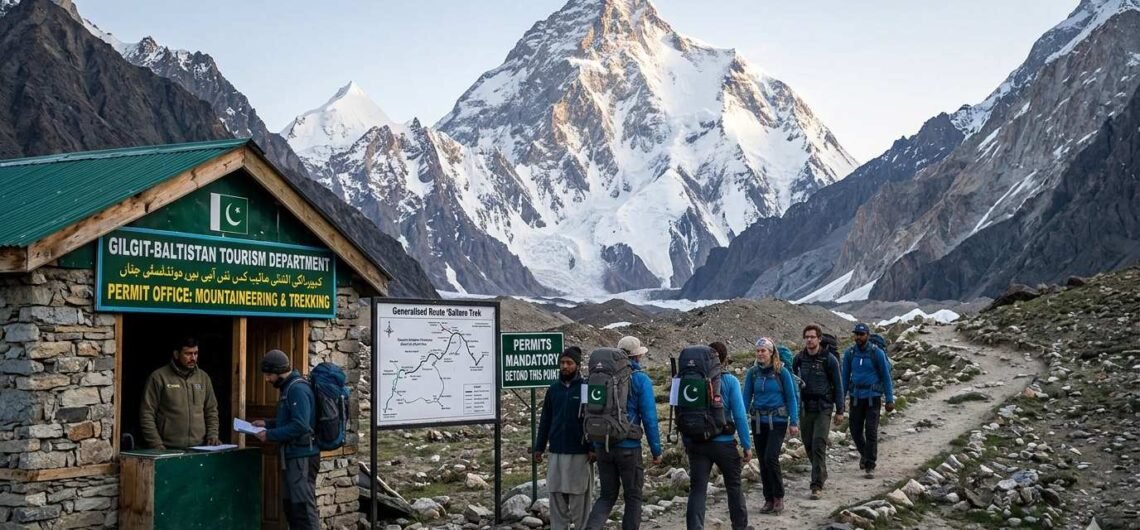
Pakistan has rapidly become one of the world’s most exciting trekking destinations. Every year, thousands of international adventurers arrive to explore the towering peaks of the Karakoram, the glacier systems of Baltoro, the legendary K2 Base Camp route, and the untouched valleys of Gilgit-Baltistan. But here’s the part many trekkers discover too late: Pakistan’s trekking permit system can feel like navigating a maze in the middle of the mountains. This guide breaks down everything you need to know about trekking permits, restricted zones, permit costs, government regulations, and trekking rules in Pakistan in 2026. Whether you are planning the K2 Base Camp Trek, Snow Lake Trek, Gondogoro La Pass, or remote expeditions in border regions, this article gives you the complete roadmap. Understanding Pakistan’s Trekking Permit System Pakistan’s trekking permit structure exists primarily because many trekking routes pass through environmentally protected regions, glacier systems, military-sensitive zones, and international border corridors. Unlike in countries where trekkers can freely enter mountain regions, Pakistan manages certain trekking routes under a controlled-access framework. Licensed trekking companies usually handle the entire process. Your operator submits your documents, itinerary, passport copies, and applications to the relevant departments. This system may feel bureaucratic, but it is designed to reduce unauthorized movement in sensitive mountain corridors. Pakistan divides trekking areas into two major categories: Open trekking zones Restricted trekking zones Open zones generally allow independent travel without special trekking permits. Restricted zones require government approval, registered operators, and sometimes mandatory liaison officers. Understanding this distinction is the single most important step in planning a successful trek in Pakistan. Why Pakistan Uses Restricted Trekking Zones If you look at Pakistan’s northern map, you’ll notice something fascinating: many iconic trekking routes sit dangerously close to international borders. The Baltoro Glacier region, for example, lies near highly sensitive geopolitical territory. The
Pakistan has rapidly become one of the world’s most exciting trekking destinations. Every year, thousands of international adventurers arrive to explore the towering peaks of the Karakoram, the glacier systems