

Introduction to K2 Base Camp Trek
We all know that K2 is the world’s second-highest peak, standing at 8611m high up in the Karakorum range. K2 is located in the heart of the Karakoram Range. K2 can be seen in its full view from Concordia during the K2 base camp Trek. The same region of Karakorum is home to trekkers from all around the globe. It is because of the presence of ultimate peaks here. The Karakoram range is located between Pakistan and China in the north and Eastern parts, respectively.
WHY K2 BASE CAMP TREK?
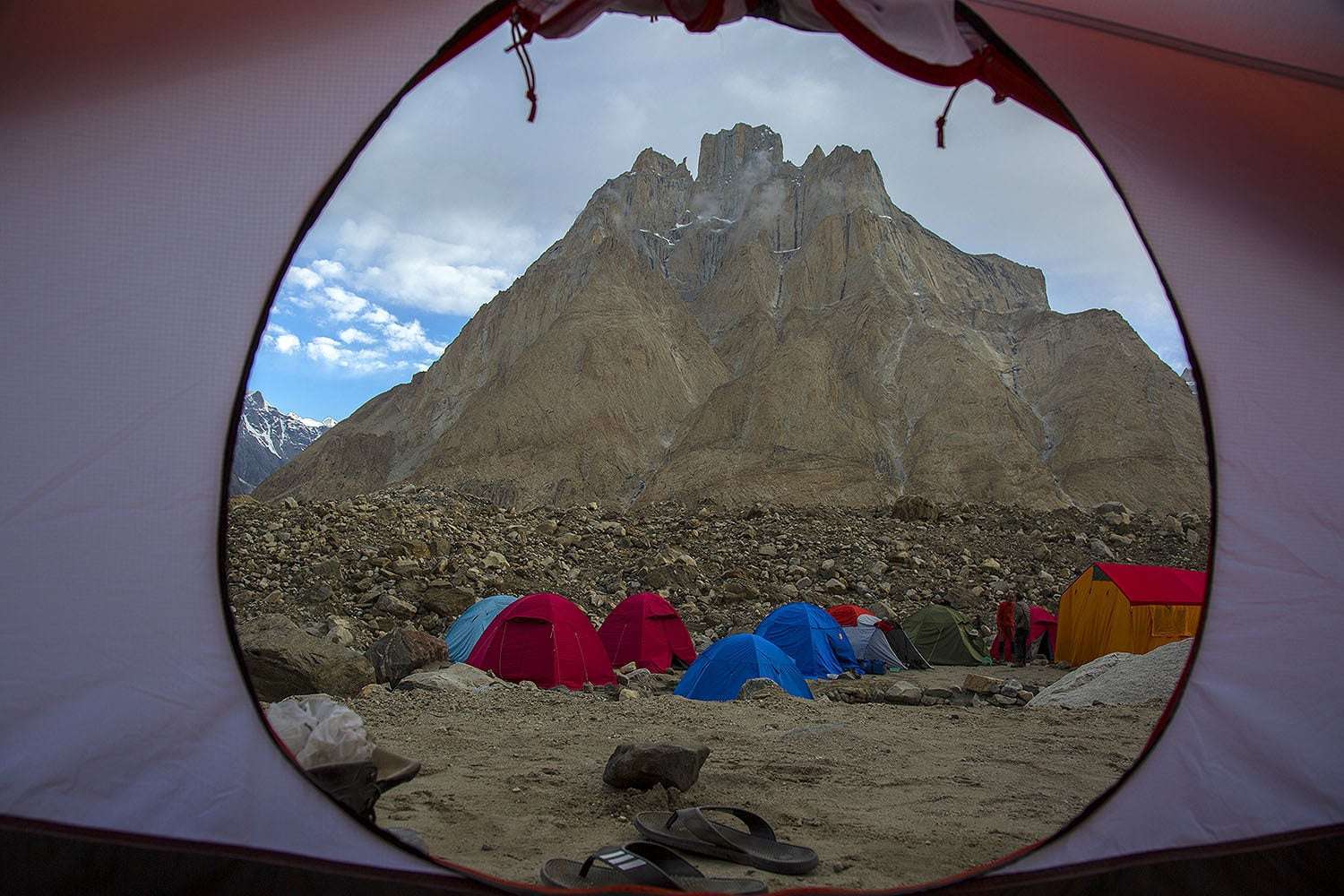
To make your journey into heaven for mountaineers, you start your journey from Skardu. From Skardu, you travel via 4×4 jeeps. It follows the eye-catching landscapes of Shigar valley till the last village of Askoli (3040 m ASL). Askoli is an emerald-green grasslands village of the Shigar valley. You will start trekking in Dreamland on foot from here. You will observe the beautiful glaciers to the snow-covered mountaintops with mountains like Trango towers (4396 ft of granite). In brief, this journey will not dissatisfy you altogether.
You will have the familiarity of trekking near the gigantic mountains. Mountains like Broad Peak(8047m), Chogholisa, Baltoro Kangri, Muztagh Tower, Gasherbrum V& VI, and several further on the way.
This journey takes you through lush green fields and snow-covered mountains with glaciers. It gives a memorable experience on its own. Trekking side by side with the mighty Baltoro Glacier. Baltoro is one of the longest glaciers outside the polar region springing 39 miles in length. It meets with the Vigne and Godwin-Austen at Concordia. Four peaks above 8000 m. sit within a radius of only 21 km. From Concordia, it honors this site with the largest concentration of the highest mountains.
Trekking without a guide
It’s not feasible for trekkers or visitors to trek to the K2 base camp without a guide. First, there will be a government-licensed guide with you who has insights into the area. Secondly, it’s not feasible for solo trekkers due to glacial environments changing abruptly. It makes new ways every year, which only a guide knows. That is why most guides are local people. The last reason without a guide is that a solo trekker can’t reach the K2 base camp. Because it takes days of trekking. You need food and shelter, facilities which only a licensed tour operator with the help of local porters and guides can provide.
K2 Base Camp Trek difficulty
It is the most popular trekking occasion for unfamiliar adventurers who visit in Pakistan on tours, including this exemplary Trek. On this Trek, you won’t discover any teahouses, at this or other agreeable spots to stay. You cannot hike the K2 Base Camp Trek independently.
Note: All travelers must be accompanied by a licensed guide and company.
Trip Name: K2 Base Camp Trek
Altitude 5153-m
Range Karakoram
Location Baltoro Baltistan
Ideal Time June-September
Duration 21 days
Grade Hard Ideal
Day 01: Arrival in Islamabad
Arrival at the airport, followed by a transfer to the hotel. Overnight stay in the hotel in Islamabad.
Day 02: Islamabad To Skardu (By Air)
Early morning flight to Skardu (subject to weather conditions); if unable to fly, we will depart by road with an overnight stay in Chilas.
Day 03: Chilas To Skardu
In case the flight has operated, we will go for a sightseeing tour of Skardu, and in case of no flight, the day will be used for overland travel from Chilas to Skardu (total drive is 22 – 24 hrs from Islamabad to Skardu). Overnight stay in the hotel in Skardu.
Day 04: Rest Day At Skardu
Sightseeing in Skardu, final packing for the Expedition.
Day 05: Skardu To Askole
After Breakfast, we will embark on jeeps for a full-day ride on a winding jeep trail to Askole – The last inhabited place on our way to the Great Glaciers. (Tent) Have your dinner and go for a good sleep. If you enjoyed the ride and are not tired, then you can explore the village of Askoli and its streets.
Day 06: Askole To Jhula
Details to Know
- Distance: around 18-20 km
- Elevation: about 160+ meters
- Time: 5-8 hours
- Difficulty: Easy, but needs commitment
Trek along the Braldu River. The terrain is quite easy, and we will have good tracks here until Pajju. We will have our lunch at Korofoung after a few hours of trek. Mostly, the tour agency provides you with a packed lunch, but a few would make a soft lunch at Korofoung. This place is near the junction of the Panma and Braldo River, and is at the snout of the Biafo Glacier.
Lunch consists of
- Local bread (paratha/chappati)
- Boiled eggs and potatoes
- Soup/ hot tea/ coffee
- Boil water to refill your empty bottles
- Dry fruits and biscuits
- Cans of Tuna and Sardines
We will continue our trek for another 2-3 hours to reach the Jhola campsite. It serves as a crucial stopping point on the K2 Base Camp trek and other routes like the Panma Glacier Sim Pass trek. After crossing the wooden bridge, there is a 90-minute trek to the original Jhula camp with the river on the left in the valley, but more groups prefer to stay at the bank of the river just after crossing the bridge to save energy and time for tomorrow.
The condition of this camp here doesn’t have the facilities like the original Jhola camp, such as water availability, washrooms, and shade on sunny days. But the staff will provide you with boiled water and place your toilet tent near the river.
Day 07: Jhula To Paiju
| Quick Stats | Details |
| Duration | Around 7-8 hours |
| Altitude Gain | 318m ( 3100m to 3418m) |
| Difficulty | Challenging and tougher on a sunny day |
| Highlight | View of Pajju Peak(6610m) and the Snouts of Baltoro Glacier |
Phase 1: Morning March along the Braldu (3 hours)
-
-
The Power Breakfast: Fuel up with a substantial, locally-sourced breakfast. Hydration is key!
-
River’s Edge: The initial hours are spent following the mighty Braldu River upstream. The path is generally flat or gently ascending, traversing through the rugged valley floor.
-
Acclimatization Focus: Our seasoned guides maintain a sustainable trekking pace to ensure proper acclimatization. Today’s steady climb is essential preparation for the higher altitudes ahead.
-
Phase 2: The Ascent and the Big Reveal (3 hours)
-
Rocky Transition: The trail begins to climb more steadily as we move away from the immediate riverbank. Expect rocky paths and scree sections. This is your first true mountain workout.
-
Lunch with a View: We pause for lunch at t, likely halfway, offering expansive views of the lower Karakoram mountains.
- Mungroung will be our lunch point with a small hut/shop to have some Coke and lunch in a quite open area.
- Water Obstacles: Depending on glacial melt, you may encounter one or two small, seasonal meltwater streams. Our team ensures safe crossings, but this is the moment for your trusty waterproof boots or river-crossing shoes!
-
As you approach Paiju, the magic begins! The first distant, yet unmistakable, views of the world-famous Baltoro Glacier, Bakhor Das Peak, and Pajju Peak start to emerge on the horizon. This sight is your Ultimate Trekking Reward.
Phase 3: Arrival at the Last Green Oasis (2 hours)
-
The Oasis: Paiju (meaning ‘salt’ in Balti) is a welcoming, relatively flat campsite, often featuring the last visible trees and greenery before the Baltoro Glacier. It serves as a vital rest and purification point during this journey.
-
Afternoon Activity: Upon arrival, settle into your comfortable tent camp. Our team will lead a short, optional Acclimatization Walk to a viewpoint, enhancing your body’s ability to adjust to the altitude (approx 3,418m).
-
Campfire & Stories: Enjoy a delicious hot dinner under the massive stars of the Karakoram. Share stories and prepare mentally for an epic day hike tomorrow, the entrance onto the Ice Highway!
Day 08: Rest Day At Paiju
Phase 1: Morning – Hydrate and Rejuvenate (9:00 AM)
-
Sleep In & Hydrate: Enjoy a slightly later start. The focus is on quality sleep and maximum hydration. Our team provides an array of hot drinks (tea, coffee, herbal infusions) to kickstart your fluid intake.
-
The Optional Acclimatization Hike: For those feeling energetic and to aid in the acclimatization process, our expert guide will lead a short, gentle ascent up the nearby ridge behind the camp towards Pajju Peak.
-
The Reward: This short effort delivers phenomenal, unobstructed morning views of the Trango Towers, Cathedral Peak, and the dramatic Paiju Peak—perfect light for photography!
-
Phase 2: Midday – Mind and Body Reset (12:00 PM)
-
The High-Altitude Spa: Take advantage of the Last Bucket Shower before the glacier! The camp often has simple, private shower tents. Even a quick wash of face and hair is a massive mood booster.
-
Laundry Moment: It’s your final chance to do any quick, hand-wash laundry that has a high chance of drying in the sun before the cold, damp conditions of the glacial camps.
-
Cultural Exchange: This day is traditionally the Porters’ Rest Day. Observe (and perhaps join!) the legendary Porters’ Celebration. Our local Balti crew slaughters goats (used for meat on the glacier stages) and local bakes roti (bread) for the journey ahead, often accompanied by traditional singing and dancing. This is an authentic Cultural Immersion Experience!
Phase 3: Afternoon & Evening – Gear Check (3:00 PM onwards)
Gear Prep Session: Our guide will conduct an optional, essential workshop on Glacier Safety and Moraine Walking. Use the afternoon to organize your pack, check your gear, and prep your water bottles for the start of the icy trekking tomorrow.
Mountain Zen: Relax, read a book, journal, or simply sit outside your tent and soak in the magnitude of the granite walls surrounding you.
“The mountains whisper here. Listen closely.”
Briefing: A final evening briefing confirms the demanding plan for the next day’s entry onto the Baltoro Glacier, ensuring every trekker is confident and ready.
Day 09: Paiju Camp to Khuburse Camp
Quick Trek Facts
-
Trekking Distance: 14km to 15km (8.5 to 9.3 miles).
-
Altitude Gain: 370 m (from Paiju 3,420 m to Khoburtse 3,795 m).
-
Duration: 6 to 8 hours of strenuous trekking.
-
Difficulty: Strenuous. The footing is highly unstable and uneven. Continued challenging footing on the moraine, but the short duration limits exhaustion.
Phase 1: Morning Moraine Walk (1.5 – 2 Hours)
-
Steady Pace: The morning starts with a continuation of the moraine traverse. Since this is an acclimatization day, a slow, steady rhythm is key.
-
Paiju Side Trail: The day begins with a walk on the final, small river-stone paths and sand of the Braldu River valley floor, leaving the green trees and water sources of Paiju behind.
-
The Glacial Snout: After about an hour, the trail leads directly to the massive, black-ice snout of the Paiju Glacier, where it merges with the Braldu River.
-
Terrain: Expect the same challenging, uneven rocky surface, demanding constant attention to foot placement.
-
Glacier Views: The sheer scale of the Baltoro Glacier is undeniable here. The views are vast, with towering peaks forming the south wall of the valley like the majestic Trango Tower and Pajju Peak on your left.
Phase 2: Lunch Stop at Liligo (1 Hour)
-
The Mid-Way Mark: Liligo is reached after approximately 90 minutes to 2 hours of trekking. It is a small, relatively flat area nestled on the lateral moraine.
-
Function: Liligo serves as an essential staging and rest area, often used by porters and sometimes for emergency camping.
-
The Lunch Setup: Your support crew will have strategically moved ahead to set up a clean, sheltered spot among the boulders. Enjoy a hot drink and a fresh, packed lunch to replenish energy for the second, shorter half of the day.
-
Vitals Check: This is the perfect time for a mandatory water and snack break and a quick check-in with your guides regarding altitude symptoms.
Phase 3: The Final Climb to Khuburse (1 – 1.5 Hours)
-
Leaving Liligo: Re-energized, the final leg is short but includes the steepest section of the day.
-
The Terrace Ascent: You will ascend sharply from the edge of the glacier up onto a well-defined, natural shelf or terrace carved into the valley wall.
-
Dramatic Arrival: Arriving at Urdukas is stunning. You are now perched high above the main body of the Baltoro Glacier, providing a vantage point with incredible depth and perspective.
Phase 4: Khuburse Camp & Acclimatization
-
Spectacular Campsite: Khuburse is one of the most beloved campsites, offering some protection and the best views looking back down the valley and across at the powerful granite formations of the Trango Cathedrals.
-
Afternoon Rest: The short trekking duration leaves the entire afternoon free for rest, journaling, taking photos, and further passive acclimatization—crucial for adapting to the new altitude.
-
Historical Note: Look for the natural rock caves on the terrace, historically used by local porters and early explorers for shelter.
Day 10: Urdukas To Goro II
This day is specifically designed for safe altitude gain and maximum enjoyment of the views. We cover a shorter distance, continuing the traverse of the Baltoro Moraine before making a final, dramatic climb to the historic Urdukas terrace.
Quick Trek Facts
-
Trekking Distance: approx. 6-8 km (3.7 to 5 miles).
-
Altitude Gain: 105 m(from Khoburtse 3,795 m to Urdukas 3,900.
-
Duration: 3 to 4 hours.
-
Difficulty: Moderate to Challenging. The duration is short, but the footing on the moraine is still demanding.
Phase 1: Morning Traverse (1.5 – 2 Hours)
-
The Start: Begin the morning from the Khoburtse campsite, which is situated directly on the Baltoro Moraine. The temperature will be cold, demanding warm layers.
-
Terrain: The initial hours involve walking over the same rough, uneven glacial moraine—a surface of rock, rubble, and dirt concealing the ice below. Maintain a slow, deliberate pace to manage the unstable footing.
-
Focus on Views: Since the day is shorter, take time to appreciate the immense scale of the glacier. Look back down the valley for a final perspective of the Trango Group as they recede into the distance.
-
Glacier Dynamics: Listen for the sounds of running water beneath the debris and watch for meltwater streams that need to be carefully stepped over.
Phase 2: Lunch Stop
As today is a shorter trek, a full lunch will be prepared at Urdukas. You gain more elevation compared to your earlier trek.
Phase 3: Arrival and Camp Life at Urdukas
-
Campsite: Urdukas is considered one of the most beautiful and protected campsites. It is set on a series of tiered, semi-green terraces perched high above the glacier.
-
Historical Features: Explore the site and view the famous natural rock caves used by local porters and climbers for centuries.
-
Key Views: The camp offers commanding views of Biale Peak/ Biale Kangri 6729m and the incredible, massive rock formations known as the Trango Cathedrals to the south.
-
Acclimatization: Due to the short trek, the entire afternoon is dedicated to rest and passive acclimatization, which is critical at this altitude before the push towards Ghoro 2.
Day 11: Rdukas to Ghoro 2
This is a longer, high-altitude day, but the challenge is offset by the spectacular rewards. The trail leaves the lateral moraine and moves directly onto the central glacier, delivering the first full, jaw-dropping views of some of the world’s most impressive peaks.
Quick Trek Facts
-
Trekking Distance: 12km (7.5 miles).
-
Altitude Gain: 380m (from Urdukas 3,900m to Goro 2, approx 4,280m.
-
Duration: 5 to 7 hours.
-
Difficulty: Strenuous. The distance and altitude are significant, requiring high stamina and endurance.
Phase 1: Leaving the Terrace (1 – 1.5 Hours)
-
Departure: Begin with an early start from the comfortable Urdukas terrace. The initial part involves a short descent back onto the main body of the Baltoro Glacier.
- Rdukus will be the last area to be tented on rough soil or a dry place.
-
Stable Ground Ends: You leave the relative stability of the Urdukas rocky path and transition back to the glacial moraine.
- Around an hour later, you leave Rdukus, you will see the first mighty peak, the Gasherbrum IV (7,925 m), standing tall right at the end of the Baltoro glacier. This sight will remain with you till you reach Concordia.
-
Terrain Shift: Unlike previous days, the path becomes less about navigating massive, broken boulders and more about walking on the central glacier, where the moraine is often covered by smaller, smoother rocks and sometimes patches of exposed ice. Footing, while still uneven, can be slightly easier than the Khoburtse-Urdukas stage.
Phase 2: The Glacier Highway to Goro 1 (2 – 2.5 Hours)
-
Central Traverse: The majority of the morning is spent walking directly up the center of the vast Baltoro Glacier, following the natural flow lines of the ice.
-
The Big Reveal: Look ahead to the massive, conical form of Masherbrum (K1, 7,821m), which dominates the south side of the valley, providing your first glimpse of a true 8,000-meter-class giant.
-
Ice Formations: You will walk past surreal formations of glacial ice that have melted, known as seracs and penitentes.
Phase 3: Lunch Stop at Goro 1 (1 Hour)
-
The Midway Point: Goro 1 is reached around midday. This site is typically a very basic, exposed rock shelter or a cleared area on the open glacier, often marked by simple stone walls built by porters.
-
Vantage Point: This spot offers one of the most magnificent mid-trek views, with the peaks surrounding you in all directions.
-
The Lunch Setup: Your crew will quickly set up a sheltered spot for a well-deserved hot lunch and drinks, allowing a full hour of rest before continuing the ascent.
Phase 4: Goro 1 to Goro 2 (1.5 – 2 Hours)
-
Renewed Push: The afternoon segment is shorter but takes you to a higher altitude, making it critical to maintain hydration and a slow pace.
-
Peak Watch: The views continue to improve. The slender, striking spire of the Muztagh Tower (7,284m) often comes into view, the unique, massive shape of Mitre Peak (6,010m) becomes clearer, and the Mashabrum Peak(K1) on the southern side of the campsite.
-
Campsite: Goro 2 is a very exposed, cold, and windy campsite located directly on the glacier. It is marked by flat, clear areas surrounded by low stone windbreaks.
-
Altitude Note: At an elevation of approximately 4,280m, the temperature will drop sharply as the sun sets. This is a cold camp, and warm clothing is essential.
-
Evening Views: If the clouds are clear, you are rewarded with an incredible panorama including Masherbrum, Muztagh Tower, and the peaks guarding Concordia. It is here that you truly feel the remoteness of the High Karakoram.
Day 12: Ghoro 2 to Concordia
| Metric | Details |
| Stage | Goro (Goro II) to Concordia |
| Duration | 5-7 hours of trekking |
| Distance | Approximately 14 km (7.3 – 7.6 miles) |
| Start Altitude | Goro 2: 4250m |
| End Altitude | Concordia: 4600m |
| Elevation Gain | approx. 600m up |
| Terrain | Mostly the smooth, central moraine of the Baltoro Glacier. Easier footing than the previous day. |
This day is an absolute highlight of the Karakoram journey, often described as trekking into the “Throne Room of the Mountain Gods.”
-
Start: You wake up at the cold, wide campsite of Goro II, with sensational morning views of Masherbrum (K1) and the iconic spire of Gasherbrum IV.
-
Mid-Trek: You follow the flow of the mighty Baltoro Glacier, walking past the junction where other peaks like the Marble Peak and Crystal Peak come into view.
-
The Reveal: The best part of the day is the final approach to Concordia. K2 is completely hidden until the very last turn as you reach the confluence of the Godwin Austen and Baltoro Glaciers.
-
Arrival: Upon arriving at Concordia, you are standing in a massive, glacial amphitheater, surrounded by four of the world’s 14 8,000-meter peaks (K2, Broad Peak, Gasherbrum I, and Gasherbrum II), along with the majestic Golden Throne (Baltoro Kangri) and Mitre Peak.
The campsite at Concordia is usually set up right on the glacier moraine, giving you an unparalleled, 360-degree view of the Karakoram giants.
Day 13: Concordia to K2 basecamp
| Metric | Details |
| Stage | Concordia to K2 Base Camp (K2BC) |
| Duration | 9 – 11 hours of trekking |
| Distance | Approximately 25 – 28 km (15.5 – 17.5 miles) |
| Start Altitude | Concordia: 4,500meters |
| End Altitude | K2 Base Camp: 5,150 meters |
| Elevation Gain | 450 meters up |
| Terrain | The Godwin-Austen Glacier. Mixed ice and moraine. Requires careful footing. |
-
Early Start: To complete this journey in a day, you will start very early, often before dawn, to take advantage of the frozen, firmer glacier.
-
The Ascent: The route follows the Godwin-Austen Glacier, which flows down from the massive peaks of K2 and Broad Peak. The walking can be challenging, involving navigating the ice-covered glacier moraine.
-
Broad Peak Base Camp (BPBC): About halfway, you will pass Broad Peak Base Camp (approx. 4,800m). Many expeditions use this as a stopping point.
-
The Final Push: From BPBC, it’s a couple more hours of difficult trekking to reach the K2 Base Camp area, right at the base of the massive mountain.
-
K2 Base Camp (K2BC): This is a vast, desolate area. You may see the colorful tents of current climbing expeditions (in season). The main objective is to stand at the foot of K2 and appreciate its sheer, intimidating scale.
Day -14:
Day 12. Rest at Base Camp
Today, we refresh ourselves here and enjoy the surrounding Peaks like Broad Peak and K2 itself, which bring us picturesque views. Taking photos and having fun with other groups there refreshes us quite well.
Day 13. k2 Basecamp to Concordia (4650). (3-5) hours.
We descend from the basecamp to the Concordia campsite, following the ups and downs of Godwin-Austin glacier.
Day 14. Concordia to Urdukas. (7-9 Hours)
From Concordia, after seeing K2 for the last time, we leave for Ghoro II, and within a few hours, we will reach the campsite. This trek is much easier than before because we are descending.
The more you descended the easier the way feels as your body is fully acclimatized now. After reaching Urdukas within a few hours, you can trek up to the hill to see the Baltoro glacier.
Day 15. Back to Pajju. 2-5 hours
We will descend following the Braldu River as we did while ascending, and will reach Pajju within a few hours very easily because the group is well acclimatized.
Day 16. Back to Korofong. 7 hours max
We will reach the Korofong campsite following the Braldo River within hours of descent.
Day 17. Koro Fong to Skardu. 10 hours max.
From Jhola to Askoli, our way encounters lush grassy lands as we are on the verge of civilization. Within a few hours, we will touch down in Askoli village. From here, we have jeep accessible road available for Skardu.
The bumpy roads of District Shigar entertain you till you meet the metal road downward the district. Leaving behind the valley, we pass through the Skardu Cold Desert on both sides for a few minutes. Then we are in Skardu city.
Day 18. Rest Day at Skardu.
Shangri-La Resort, Sarfaranga Desert, Kharfocho Fort, Sadpara Lake, and many other attractive sights are waiting for your arrival. Try to cover a maximum number of these places on the 20th day of our trek.
Day 19. Fly Back to Islamabad. 1 Hour.
You will be in Islamabad within one hour of the flight if the weather allows. Otherwise, we will followthe River Indus to meet KKH near Gilgit, and our night stay will be at Chilas. The next morning, we leave for Islamabad via Babusar Pass. In the evening, we will be in Islamabad.
Day 20. Rest day in Islamabad
Today you have options of tours of the Taxila Museum and Murree, and many spots within Islamabad.
Day 21. Departure for home
Our staff will take you to the airport at the time of your departure. It’s time to say goodbye to you all.
Note: Day 22
will be used as a ‘cushion’ day in case of delays in travel due to weather, route change, health, acclimatization issues during the trek, etc
Budget-Friendly Tour and Trekking
All our tours and treks are budget-friendly, without compromising comfort or service quality. At Visit in Pakistan, we take pride in delivering reliable service, which is why many clients choose to travel with us again. Moreover, our premium services are equally appreciated by corporate groups, business travelers, and high-profile clients. From affordable adventures to luxury experiences, our Five 8,000 m Base Camp Trek is a perfect example of the quality we offer.
Experienced Local Team for Your Journey
Our certified mountain guides and porters are born and raised in Baltistan. Therefore, they know every rock, glacier, and trail. With decades of experience, they make your journey safe, seamless, and unforgettable.
Tailor-Made Itineraries
We customize each itinerary to match your schedule, budget, and interests. From flight bookings to basecamp logistics, our team manages everything. As a result, you can focus entirely on enjoying the TREK and tour experience.
Safety and 24/7 Backup Support
Your safety and comfort come first. In addition, we provide full backup support, including rescue coordination, reliable transportation, and on-ground communication. This ensures peace of mind throughout your adventure.
Services Included
- Liaison with the Ministry of Tourism in Islamabad for the climbing permit process, providing the appointed Liaison officer’s measurements for his prescribed kit.
- Process during import/export permit from the Ministry of Tourism.
- Clearance of cargo before the arrival of the team and its storage.
- Assistance upon arrival/departure.
- Official Briefing/Debriefing.
- Hotel accommodation in Rawalpindi/Islamabad, Chilas.
- All meals during the trek and at B.C. as per the itinerary.
- Porterage of 75 kg per person of expedition equipment and high altitude food, etc., to the B.C., and 50 kg per person on return from B.C.
- Road transfers between the airport/hotel and within the city as per the itinerary.
- Sleeping tents, mattresses, mess, kitchen, and toilet tent with tables/field stools and camping ground fees.
- Kitchen equipment, crockery, cutlery, fuel, and related community gear.
- Wages and basic kit of guide, sirdar, cook, and assistant(s).
- Insurance for our field staff and low-altitude porters (except for helicopter rescue).
- Porterage at airports, hotels, toll taxes, and parking fees, etc.
- Mail handling/forwarding to B.C./overseas except for postage charges.
- Reconfirmation of air tickets.
- Hiring of HAPs, mail runner(s), and any other crew as per requirement. (Wages and kit to be arranged by the team).
Services not Included
- International & domestic airfare, airport tax, and excess baggage charges.
- High altitude porters/any crew above B.C.
- Helicopter emergency rescue fees (refundable if not used)
- High altitude tents, sleeping bags, personal and climbing equipment of any kind beyond base camp, including high altitude food and oxygen.
- Medications, ground evacuations, and helicopter rescue charges of any kind.
- Room services, laundry, beverages, phone/communication bills, and items of a personal nature.
- Insurance liability of member (s) and other under force majeure conditions.
- Climbing Permit, Pollution and Environmental fee, or any other payment required to be paid to Pakistan’s Government.
- Clearing agent charges.
- Members climb gears
- Member’s personal insurance
- High altitude food
- High altitude porter
- Any other service not mentioned in the above list
1. What is the K2 Base Camp Trek?
A high-altitude trekking expedition in Pakistan’s Karakoram Range that leads to K2 Base Camp (5,150 m) — the base for climbers attempting the world’s second-highest peak. It may include crossing Gondogoro La Pass (5,585 m) for a complete circuit experience.
2. How long does the trek take?
The full itinerary typically lasts 15–21 days, including arrival in Pakistan, travel to the trailhead, the trek itself, and departure. Duration can vary based on weather, acclimatisation needs, and itinerary choices.
3. When is the best time to trek to K2 Base Camp?
The ideal season is June through September, when weather is most stable, trails are accessible, and temperatures are more moderate.
4. What is the total trekking distance and elevation?
The walk from Askole to K2 Base Camp is approximately 90 km round-trip, with significant altitude gain requiring careful acclimatisation.
5. What level of fitness do I need?
This is a challenging high-altitude trek that requires good cardiovascular fitness and endurance. Prior trekking experience and training (long hikes with a loaded pack) are highly recommended.
6. Do I need a guide or permits?
Yes — a licensed local guide and a trekking permit are mandatory to access the Baltoro Glacier region and K2 Base Camp. Operators usually handle permits as part of the package.
7. What accommodation can I expect?
Overnight stays are primarily tents at designated campsites. Basic guesthouse options are available only in towns like Skardu and Askole before and after the trek.
8. What food is provided during the trek?
Meals are usually included, consisting of local and international options — breakfast, lunch, and often three-course dinners prepared by trekking staff.
9. Is travel insurance necessary?
Yes — insurers covering high-altitude trekking and emergency evacuation are strongly recommended. Policies should include helicopter evacuation where possible.
10. What should I pack?
Essentials include:
-
Insulated layers and shell clothing
-
High-altitude sleeping bag (-20 °C rated)
-
Sturdy trekking boots and crampons (for pass crossing)
-
Sun protection, water purification, and trekking poles
11. Will I face altitude sickness?
Yes. Appropriate acclimatisation is critical. Most itineraries include rest days to help your body adjust and reduce the risk of Acute Mountain Sickness (AMS).
12. What are the risks involved?
Challenges include altitude, unpredictable weather, rough terrain, and remote conditions. Safety depends on preparation, guides, and weather conditions.
13. Are there cultural considerations?
Local Balti communities are predominantly Muslim; trekkers should respect customs, dress modestly in villages, and ask before photographing locals.
14. How much does the trek cost?
Typical costs range depending on services and group size, but professionally organised packages usually cover permits, guides, porters, food, camping gear, and logistics.


Tour Reviews
A beautiful and memorable journey in Pakistan. These landscapes are just awesome. I went to K2 base camp with my friends. I was very nervous before going to Pakistan. I found visit in Pakistan team via couple of searches. Half of my fears and lots of questions got solved at first conversation with their guide. Their way of communication, management, pricing, and hosting was super easy and friendly. Our group impressed and had an amazing experience in Karakorum, Baltoro, Baltistan and on K2 base camp.
I would have enough time to stay few days at Base camp. I whish I could spend more times in Pakistan. Next time, will plan more better and have more time to stay connected with Mountains.
A must recommended trek. A must recommended tour operator to organize treks.
Best of luck
Thank you “Gracias Todos”
We loved your stay in Pakistan during K2 base camp trek. It was an honor to host your people all around from Spain. We are happy that you considered our services are up to the mark. Hope to see you again in Pakistan.
Best of Luck
Team Visit in Pakistan
Our K2 base camp trekking was one of our best experiences in Pakistan. We travelled all along the way from USA to Pakistan. The beautiful and life long trek was managed by Visit in Pakistan.
Definitely we will come back to these beautiful mountains.
These guys are highly appreciated, endorsed and trusted company to register your Trekking in Pakistan.
Best Wishes and See You again…!!!
These destinatios are really speechless and outclass. We got an opportunity to trek to K2 with visit in Pakistan. I would like to thank them for their precious plan, time and experienced guide to provide us. They make our trek more than special to us.
Our sixteen member group all along the way from USA liked and fell in love in Pakistan particularly the northern part.
Highly recommended tour agency for trekking in Pakistan.
Best wishes 🤗.
K2 base camp trekking was one of my lifelong experiences in Karakorum, Pakistan. We were a group of 18 people from different countries in Europe and western states. Our journey was organized by Visit in Pakistan Treks and Tours. The trekking was so amazing to experience once in my life. It is recommended trekking destination in Pakistan. We got really great assistance from the entire crew of Visit in Pakistan Treks, Tours, and Expeditions.
I really will come back to Pakistan with my group again and experience the Karakorum region.
Visit in Pakistan Treks and Tours is highly recommended and trusted tour agency in Pakistan for your trekking and tours assistance.
Thank You Michel. Indeed it was great experience with you all. That was lovely memories. Welcome Back to Pakistan
Absolutely stunning and beautiful. The services, management, landscpaes, cook and campings were super during out trek.
Leave a Review